It's 4:47pm Friday. Sarah was rear-ended on the M1. She rings three firms.
The first one to respond signs her. She'll have signed by Saturday.
At your firm she gets voicemail — Mel just walked out. At firm two she gets a five-field form: name, email, phone, "how can we help?" She types one sentence. At firm three she gets the partner's mobile, picked up on the third ring.
She signs with firm three.
That's how PI works now. A six-lawyer firm doing 50 enquiries a month loses about five good matters a month because someone else responded first. At A$30,000 average fee, that's A$1.8M a year walking out the door — while your intake person is still working through Monday's callback list.
Here's the exact same Friday — with Outset:
- 4:47pm
Sarah calls you first — exactly like before. This time there's no voicemail: Outset texts her a link before she's even hung up.
- 4:51pm
From the couch she answers the real questions — and because she matches the matters your firm takes on, Outset offers her a time on the spot. She books herself into Tuesday 11am, and never dials firm two or three.
- Every other door
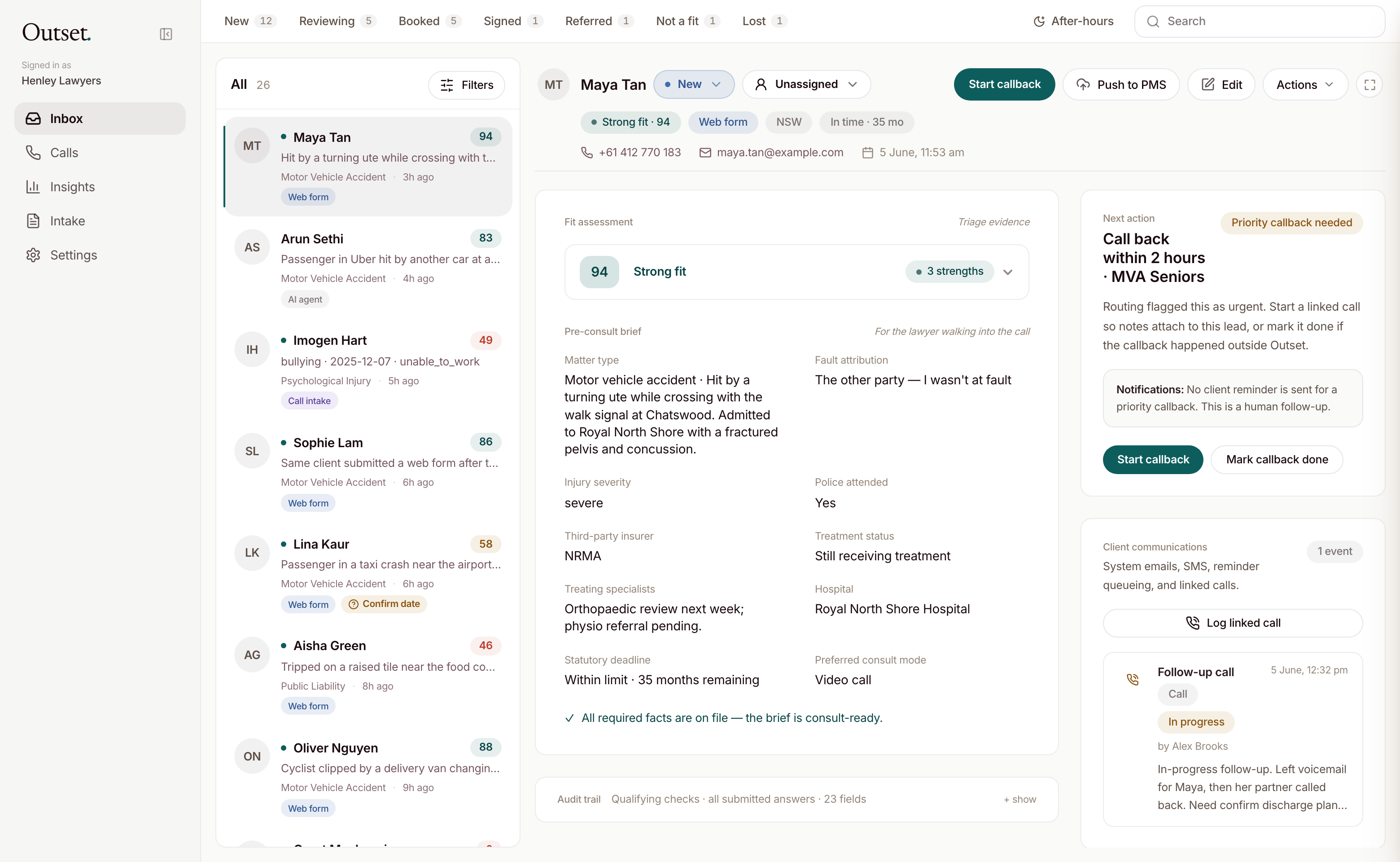
A web claim check, an after-hours miss, a client asking ChatGPT — all land in the same ranked inbox.
- Monday 8am
You open your inbox to a lawyer-ready brief at the top — matter type, fit score, limitation date, already in LEAP.
- Every call that matters
Bad-fit enquiries don't eat your team's day, and the good matters don't slip away. Your people are free to pick up the phone — a real person on the line while the brief writes itself behind them. The national firms can afford big intake teams; you don't need one. A real human who answers is how a smaller firm out-closes them.
Outset catches her, qualifies her, books her — before you've opened the file. You do the one thing it can't: be her lawyer.